| Click here to see a web copy of this news release | |||
What Are Humans Designed to Eat?Metabolic Flexibility, Energetic Resilience, and the Modern Food Environmentby Richard Z. Cheng, MD, PhD INTRODUCTIONModern nutrition debates have become increasingly polarized between low-fat, Mediterranean, plant-based, vegan, ketogenic, low-carbohydrate, and animal-based dietary models. Yet despite decades of nutritional guidelines and enormous scientific effort, chronic diseases-including obesity, type 2 diabetes, cardiovascular disease, autoimmune disorders, cancer, and neurodegenerative diseases-continue to rise globally. This raises an important question: What diets are actually most compatible with human physiology, metabolic biology, and long-term physiological resilience? From an Integrative Orthomolecular Medicine (IOM) Systems Medicine perspective, nutrition should not be evaluated solely according to calories or isolated macronutrients, but according to broader systems-level effects on:
Human physiology evolved under conditions of fluctuating food availability, intermittent fasting, prolonged physical exertion, and highly variable nutritional environments. As a result, humans developed remarkable metabolic flexibility-the ability to transition between glucose metabolism, fatty acid oxidation, and ketone utilization depending on energetic demands and nutrient availability. Modern industrialized food systems differ profoundly from these ancestral conditions. Continuous feeding, ultra-processed foods, refined carbohydrates, industrial seed oils, circadian disruption, physical inactivity, and chronic hyperinsulinemia may progressively impair this adaptive fuel-switching capacity. From a systems-level perspective, many chronic diseases may therefore reflect not simply isolated organ dysfunction, but progressive loss of metabolic flexibility and energetic resilience. 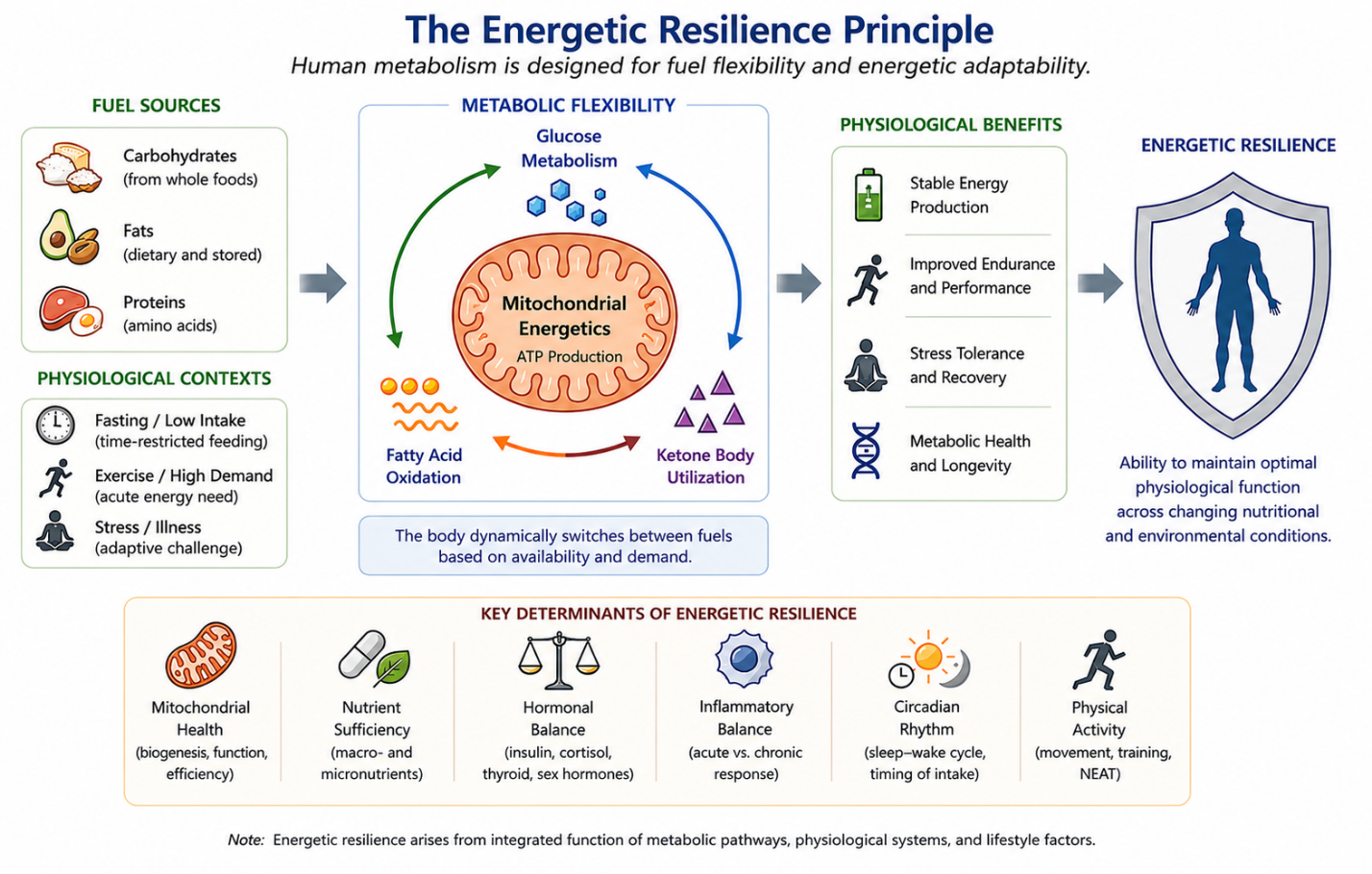
Figure 1. The Energetic Resilience Principle. Fatty Acid Oxidation Is Normal Human PhysiologyFor many readers, the term "fatty acid oxidation" may initially sound harmful because the word "oxidation" is often associated with oxidative damage and free radicals. However, fatty acid oxidation is actually the normal mitochondrial process by which humans convert stored fat into usable energy. Fatty acid oxidation should not be confused with pathological oxidative stress. Rather, it is one of the body's most important energy-producing mechanisms and is essential for human survival during fasting, prolonged physical activity, and periods of reduced carbohydrate availability. When food intake decreases-or when carbohydrate intake is reduced-the body begins breaking down stored fat (triglycerides) into fatty acids through a process called lipolysis. These fatty acids are then transported into mitochondria, where they undergo beta-oxidation to generate ATP, the body's primary energy currency. At the same time, the liver can convert fatty acids into ketone bodies, including beta-hydroxybutyrate and acetoacetate. These ketones can then serve as highly efficient alternative fuels for the brain, skeletal muscle, and heart. In other words, fatty acid oxidation and ketone utilization are not abnormal or dangerous metabolic states. They are normal components of human metabolic flexibility and evolutionary survival physiology. Throughout most of human history, humans did not have constant access to food. Survival depended on the ability to maintain stable energy production during intermittent fasting, migration, hunting, environmental stress, illness, and fluctuating nutrient availability. As a result, humans evolved remarkable fuel-switching capability-the ability to transition between glucose metabolism and fat-based metabolism depending on physiological conditions. From an IOM Systems Medicine perspective, one major problem in the modern industrialized dietary environment is that many individuals gradually lose this metabolic flexibility due to:
Over time, this may impair the body's ability to efficiently access stored fat for energy. Many individuals therefore become increasingly dependent on frequent carbohydrate intake simply to maintain perceived energy stability. This loss of metabolic flexibility may contribute to:
Accordingly, the goal is not simply "low carbohydrate intake" alone. The deeper physiological objective is restoration of metabolic adaptability and energetic resilience-the ability to efficiently and safely transition between fuel systems without metabolic instability or "energy collapse." Several lifestyle and physiological factors may help support this adaptive transition, including:
Within this framework, nutritional ketosis should not necessarily be viewed as an abnormal metabolic condition, but rather as part of normal human physiological adaptability. 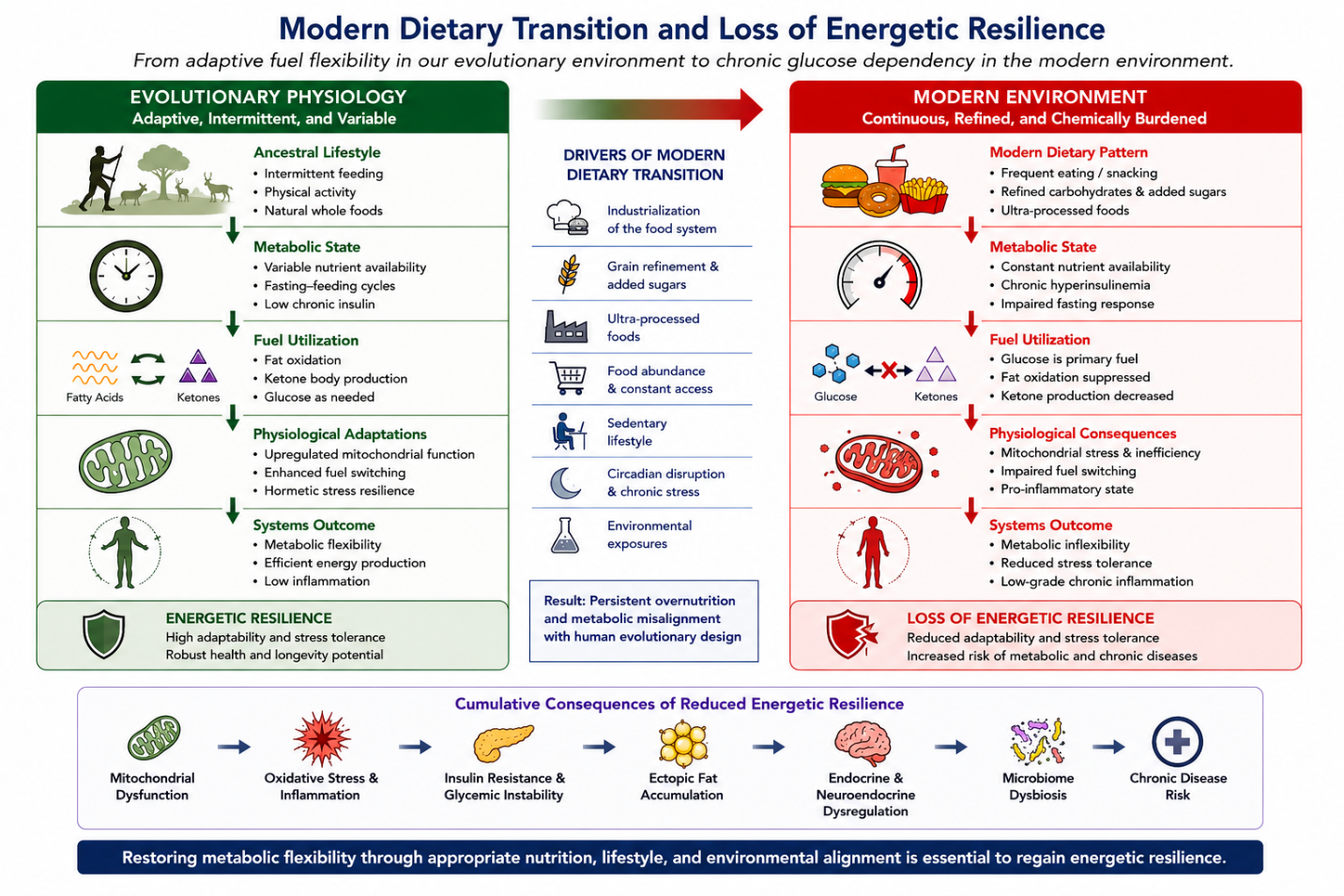
Figure 2. Modern Dietary Transition and Loss of Energetic Resilience. No Modern Food System Is Completely Toxin-FreeModern dietary debates often portray particular food systems as either "healthy" or "toxic." In reality, no modern dietary system is entirely free of toxicological burden. Plant-heavy dietary systems may involve greater exposure to:
Conversely, animal-heavy dietary systems may involve greater exposure to:
Thus, different dietary systems may shift toxicological exposure profiles rather than eliminate toxicological burden entirely. From an IOM Systems Medicine perspective, the key question is not whether a diet is completely "toxin-free," but whether the overall dietary pattern:
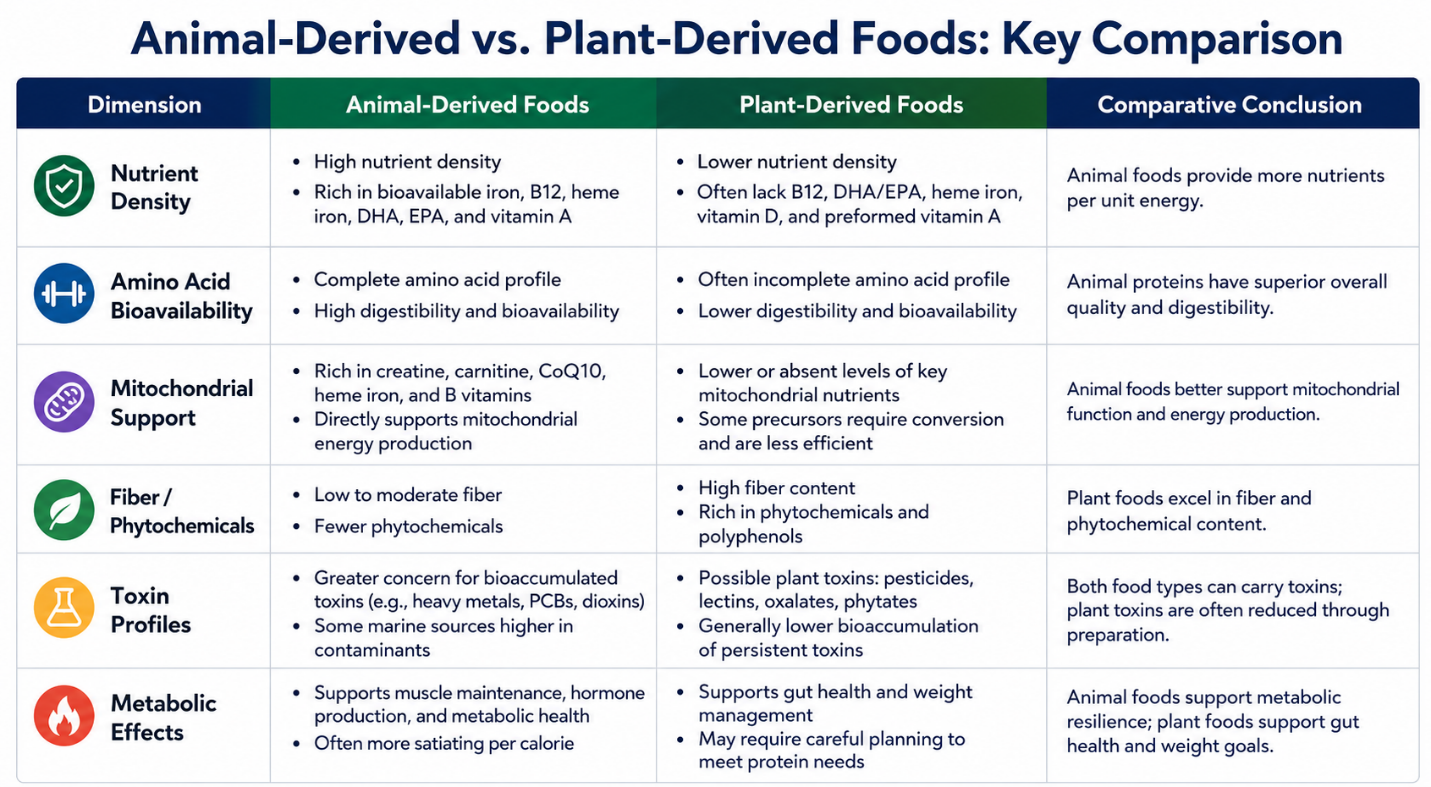
Table 1. Simplified comparison of animal-derived and plant-derived foods from an IOM Systems Medicine perspective. Humans Evolved for Fuel FlexibilityThroughout most of human evolutionary history, survival depended not on continuous food availability, but on the ability to maintain stable energy production during intermittent fasting, migration, hunting, environmental stress, and fluctuating nutrient availability. Humans therefore evolved highly adaptive fuel-switching physiology capable of utilizing:
depending on energetic demand and nutrient availability. By contrast, many modern industrialized dietary environments promote almost continuous glucose exposure through:
Over time, this may impair access to endogenous fat stores, reduce mitochondrial flexibility, and increase dependence on continuous carbohydrate intake for perceived energy stability. 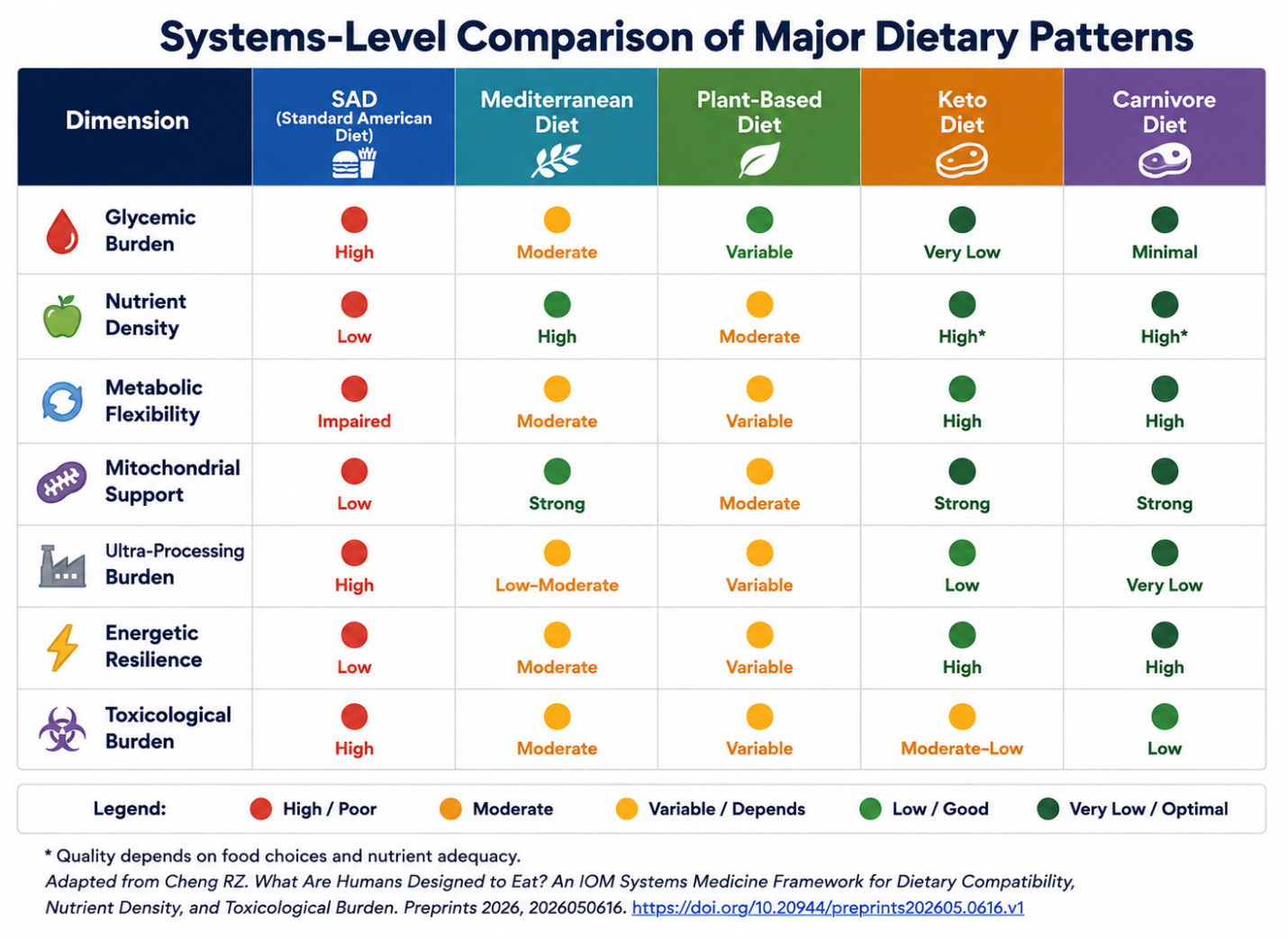
Table 2. Simplified systems-level comparison of major dietary patterns within the IOM Systems Nutrition Framework. Major dietary patterns differ substantially in glycemic burden, nutrient density, metabolic flexibility, mitochondrial support, energetic resilience, processing burden, and toxicological exposure profiles. Adapted from Cheng RZ. What Are Humans Designed to Eat? Preprints 2026. 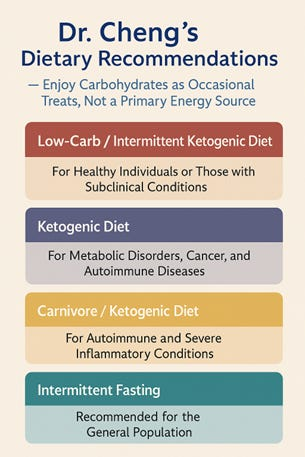 Figure 3. Systems-level dietary framework based on metabolic flexibility and clinical context. CONCLUSIONHuman nutrition cannot be adequately understood through simplistic calorie-based or ideology-driven frameworks alone. Humans evolved as metabolically flexible omnivores capable of adapting to fluctuating nutritional environments through dynamic fuel switching between glucose metabolism, fatty acid oxidation, and ketone utilization. From an IOM Systems Medicine perspective, optimal nutrition should therefore be evaluated according to its effects on:
No single dietary model is universally ideal under all conditions. Rather, nutritional compatibility likely varies according to:
However, several common principles consistently emerge across systems-level nutritional analysis:
The modern chronic disease epidemic may therefore reflect not merely excess calories, but a broader mismatch between industrialized dietary environments and human evolutionary metabolic physiology. For readers interested in the full scientific systems-level analysis, including detailed mechanistic discussion, comparative dietary frameworks, nutrient density analysis, and toxicological considerations, see the complete preprint paper: Cheng RZ. Additional systems-level discussions on nutrition, metabolic flexibility, orthomolecular medicine, and chronic disease are available through Dr. Cheng's ongoing educational publications on Substack: https://rzchengmd.substack.com. Orthomolecular MedicineOrthomolecular medicine uses safe, effective nutritional therapy to fight illness. For more information: http://www.orthomolecular.org Find a DoctorTo locate an orthomolecular physician near you: http://orthomolecular.org/resources/omns/v06n09.shtml The peer-reviewed Orthomolecular Medicine News Service is a non-profit and non-commercial informational resource. Editorial Review Board:Jennifer L. Aliano, M.S., L.Ac., C.C.N. (USA) Comments and media contact: editor@orthomolecular.org OMNS welcomes but is unable to respond to individual reader emails. Reader comments become the property of OMNS and may or may not be used for publication. Click here to see a web copy of this news release: https://orthomolecular.activehosted.com/p_v.php?c=557&m=451&s=bad97c655476f96a390a72c05a742011&d=0&v=2&l |
|||
|
This news release was sent to _t.e.s.t_@example.com. If you no longer wish to receive news releases, please reply to this message with "Unsubscribe" in the subject line or simply click on the following link: unsubscribe . To update your profile settings click here . This article may be reprinted free of charge provided 1) that there is clear attribution to the Orthomolecular Medicine News Service, and 2) that both the OMNS free subscription link http://orthomolecular.org/subscribe.html and also the OMNS archive link http://orthomolecular.org/resources/omns/index.shtml are included.
|
|||


